For many therapists in Canada and the USA, a Psychology Today profile brings in a steady flow of enquiries. Getting the message is the easy part. Turning it into a booked first session takes a fast reply, an easy next step and a follow-up for people who go quiet. Here's a simple system for all three.
Why enquiries go cold
Someone looking for a therapist often messages several at once. Then they wait. If your reply comes two days later, they may have booked with someone else, or lost their nerve. Enquiries also get lost in a busy inbox, and there's rarely a record of who followed up and who didn't.
The fix is to shorten the time between the message arriving and the person having a time in your calendar.
Step 1: Get every enquiry in one place
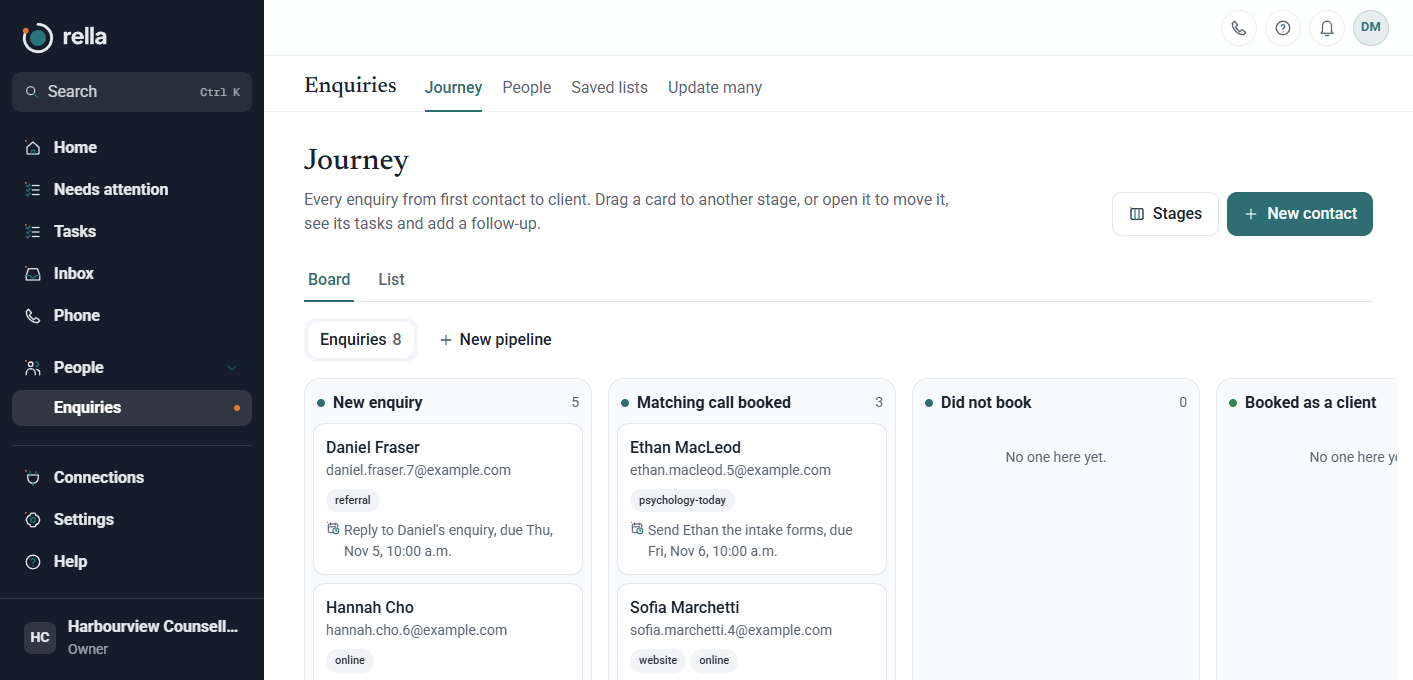
Psychology Today sends each enquiry to your email. Instead of leaving them in your inbox, send them to wherever you track new clients. Setting up a forwarding filter in Gmail or Outlook is enough: every enquiry email from Psychology Today goes to your client management tool, where it becomes a new enquiry with its source attached.
Once enquiries from your website, referrals and directories all sit on one list, you can see what's new, what's waiting on you and what's waiting on them.
Step 2: Reply fast, with one clear next step
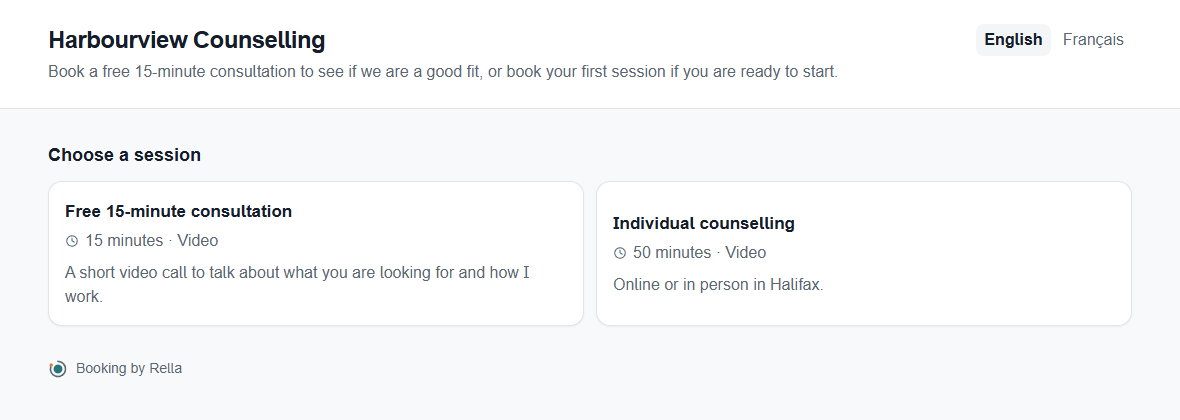
Aim to reply the same day, even if it's short. Thank them, say whether you have space, and give them one thing to do next: book a free 15-minute consultation using your link. Don't ask them to reply with three times that suit them. A booking link removes a whole round of emails.
A short template helps:
Hi [name], thank you for reaching out. I do have space for new clients right now. If you'd like to talk first, you can book a free 15-minute call at a time that suits you here: [booking link]. Talk soon, [your name]
Keep health details out of your reply. Wait until the person is in a secure system before you get into what brings them to therapy.
Step 3: Put your booking page on your profile
Psychology Today profiles let you add a website link. Point it at your booking page or a short landing page with your booking link on it. Some people would rather pick a time than write a message, and this lets them.
Step 4: Follow up with people who don't book
Some people won't book after the first reply. That doesn't mean no. A short, gentle follow-up a few days later, then again after a week or two, brings some of them back. Keep it low pressure: you're still here, here's the link, no need to reply if they've found support elsewhere.
Only send ongoing follow-up emails to people who agreed to hear from you, and stop as soon as they book or ask you to stop.
Step 5: Track where your clients come from
Psychology Today profiles cost money each month. Knowing how many enquiries and booked clients it brings, compared with your website or referrals, tells you whether it's paying for itself. If every enquiry is tagged with its source, a monthly report gives you that answer in seconds.
Doing it in Rella
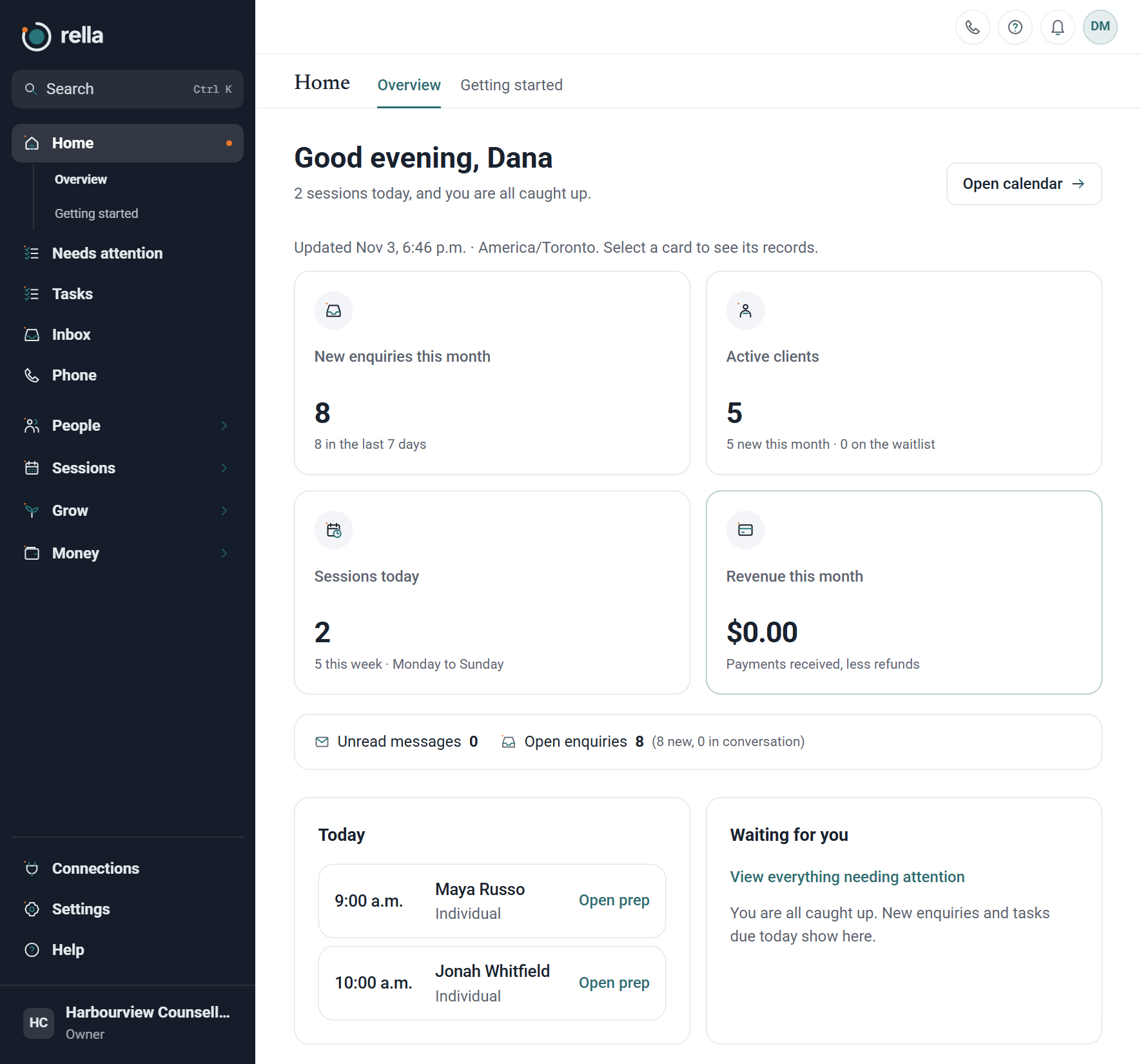
Rella gives each business a private forwarding address for Psychology Today. Add a Gmail filter once, and every enquiry arrives on your enquiry board with Psychology Today as its source. Someone already in Rella is matched by email, then phone, instead of being added twice. Your follow-ups for new enquiries run on their own.
The Nurture enquiries that did not book follow-up sends three gentle emails over about a month to people you move to Did not book, only if they agreed to marketing emails. It stops as soon as they move to another stage. Reports show enquiries by source, so you can see what Psychology Today brings in.
Read the Psychology Today setup guide or see Rella for therapists.