A missed session costs you the fee and an hour you could have given someone on your waitlist. It can also be a sign that something is going on for the client. You can't prevent every no-show, but a few habits and the right setup cut them down.
Start with a clear cancellation policy
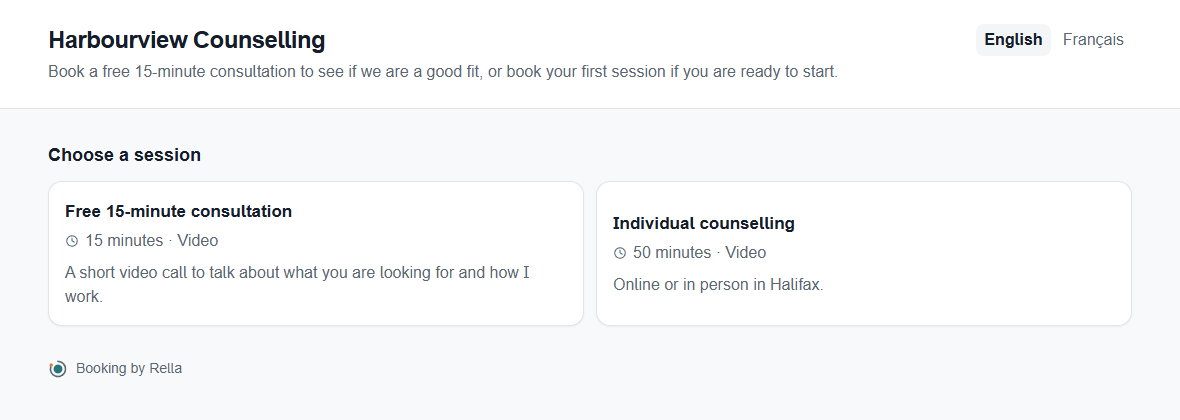
Write your policy in plain words and put it in three places: your informed consent form, your booking page and your reminder emails.
A good policy answers four questions:
- How much notice do you need to cancel or move a session? Many practices use 24 or 48 hours.
- What happens with a late cancellation or no-show? A full fee, a partial fee, or a session used from a package.
- Are there exceptions, such as illness or emergencies?
- How should clients cancel? Give them one clear way.
Decide in advance how you'll handle the first missed session. Some therapists waive the first one with a kind note that explains the policy. That keeps the relationship intact and makes the second one easier to charge.
Send reminders, every time
Many no-shows aren't deliberate. People forget, mix up the day or lose track of time zones. An automatic reminder before every session, with the date, time and location or video link, handles a lot of that.
Two details make reminders work better:
- Show the time in the client's time zone, especially if you see people online across provinces or states.
- Keep health details out of the reminder. The reminder only needs the time and how to join.
Make rescheduling easier than not turning up
If moving a session means writing an email and waiting for a reply, some clients just won't come. Put a link in every reminder that lets them move or cancel the session themselves, within your notice period. You get the slot back in time to offer it to someone else, and the client stays in their routine.
Take payment at booking, or sell packages
When a session is already paid for, people are more likely to turn up. Two common ways:
- Payment or deposit at booking for first sessions and consultations that aren't free.
- Packages of sessions paid upfront or monthly, where a late cancellation uses up a session from the package. Your cancellation window is written into the package agreement the client signs.
Check your professional college's rules on fees and cancellations, and make sure your approach fits clients on a sliding scale.
Look for patterns
A client who misses twice in a month may be struggling, losing interest, or finding the time no longer works. Mark each session as completed or no-show so you can see patterns, and reach out with care rather than an invoice. Sometimes a different day or a shorter session solves it.
Fill the gaps you can't prevent
Keep a short list of clients who would like an earlier time. When someone cancels with notice, offer the slot to the next person. Late cancellations then cost you far less.
A setup checklist
- Cancellation policy written in plain words.
- Policy included in your consent form, booking page and reminders.
- Automatic reminder before every session.
- A move or cancel link in each reminder.
- Payment at booking or packages where it makes sense.
- Each session marked completed or no-show.
- A list of clients who want an earlier slot.
Doing it in Rella
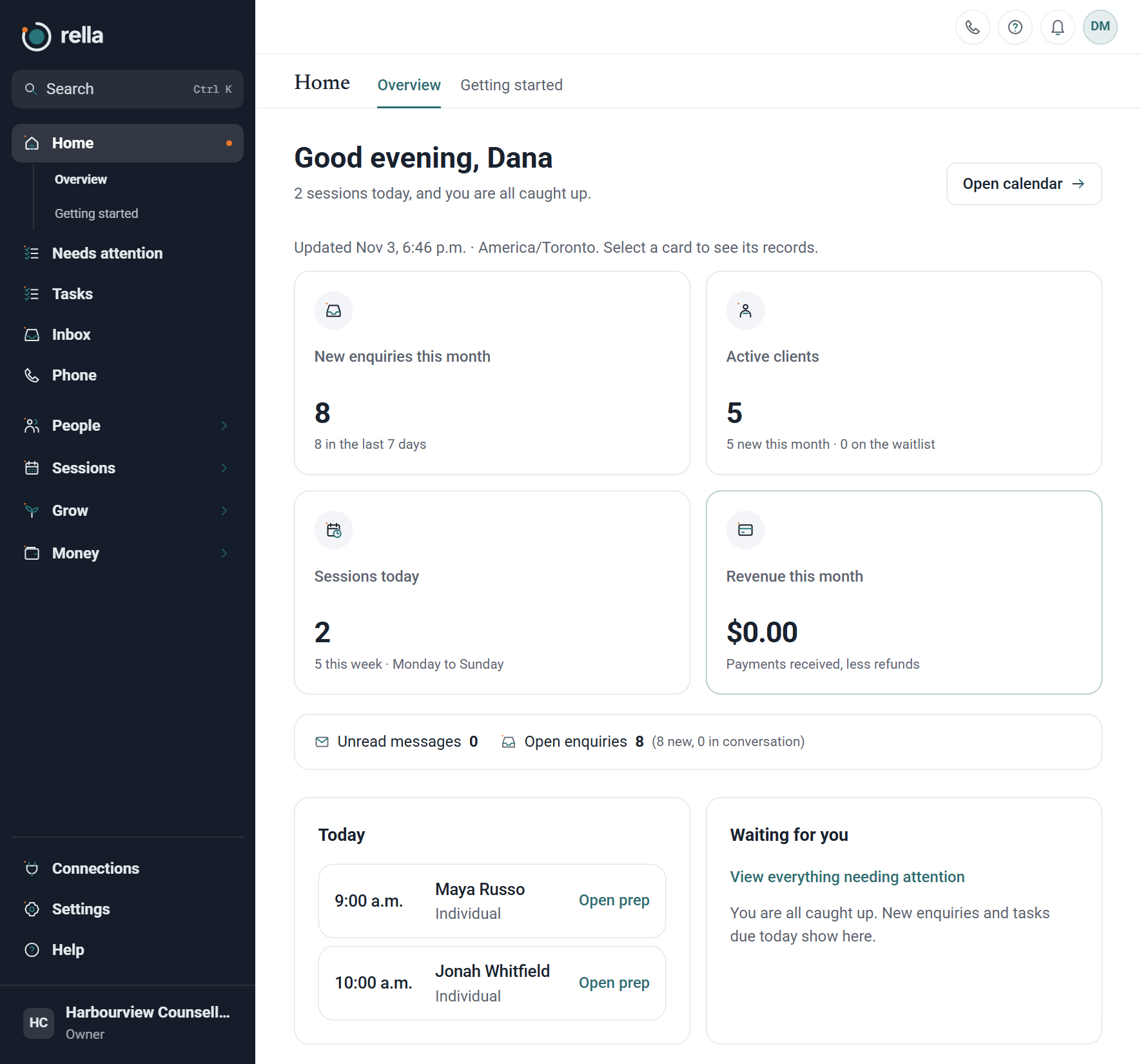
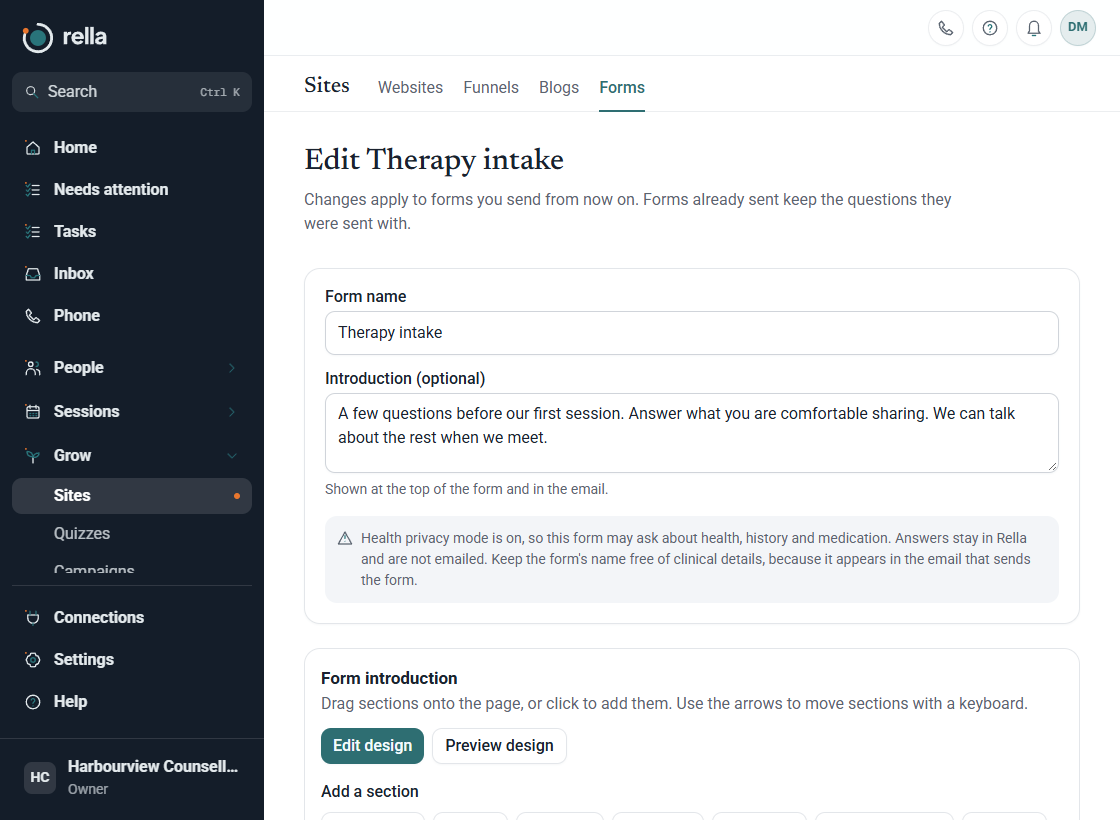
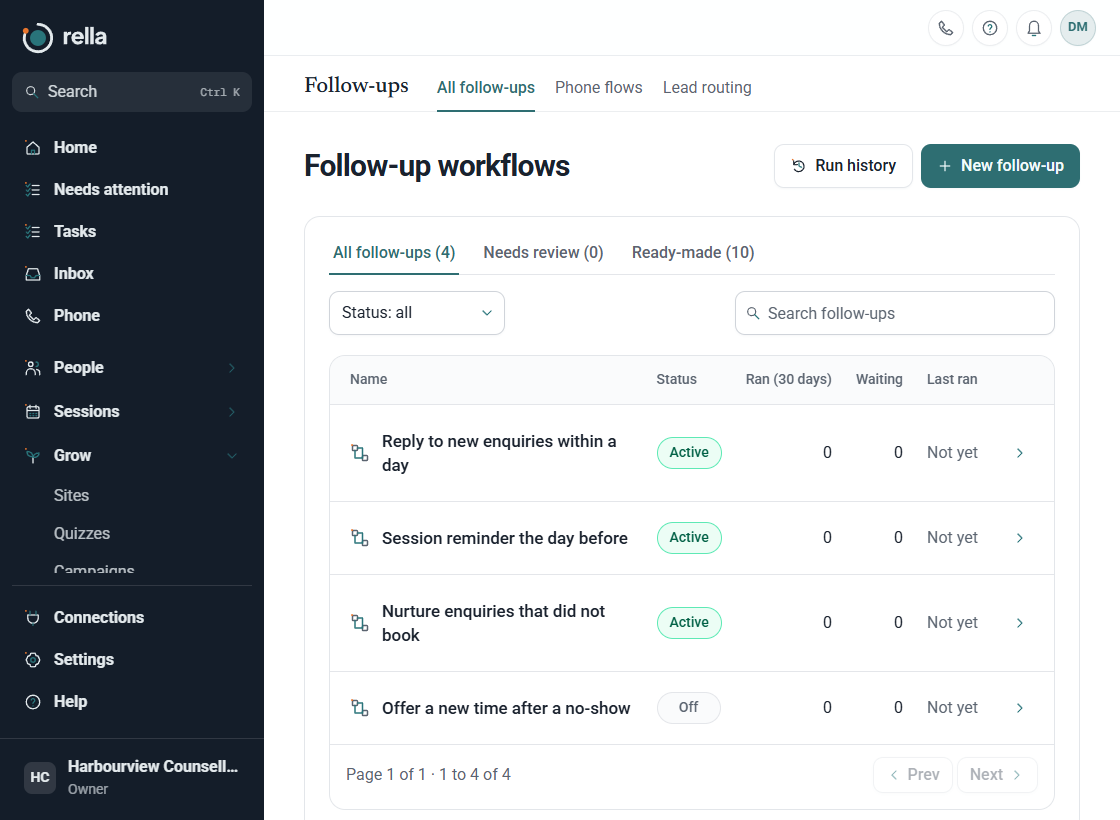
Rella sends session reminders with a link to move or cancel, shows booking times in each visitor's own time zone, and can take payment when someone books. Packages let clients sign your agreement and pay in full or monthly, and you choose how many hours ahead they must cancel for a session to go back into the package. Marking a session as no-show can start a follow-up, such as a task to check in with the client.
See Rella for therapists or read the packages guide.